
Push-back rack
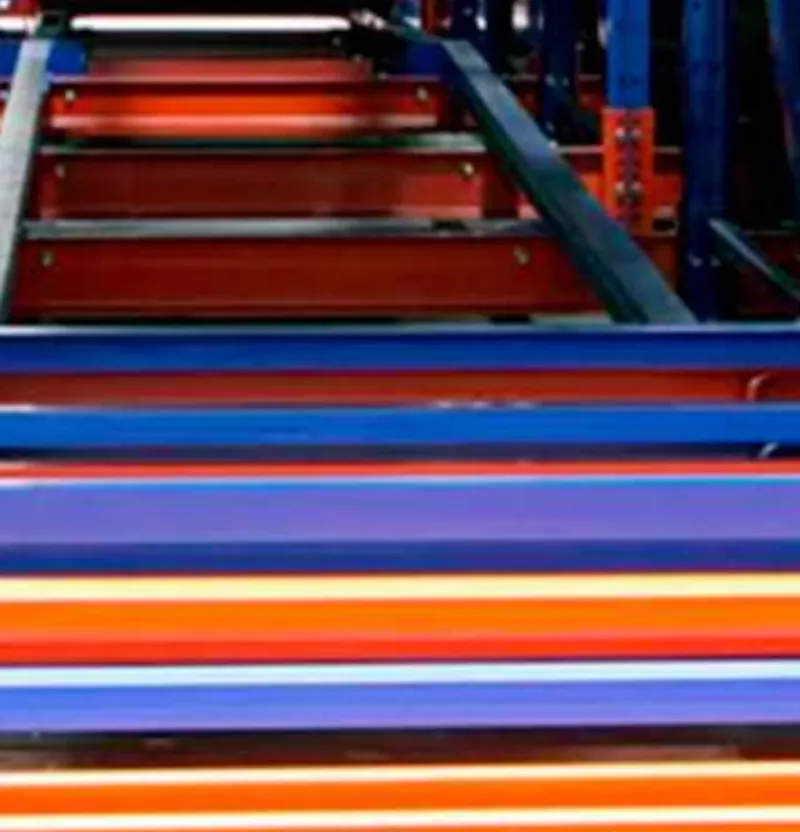
Nested-cart system: loading and unloading are done from the same aisle while pallets move toward the back. Combines density with operating speed.
- High storage density
- A single operating aisle
- Efficient pallet access
- More capacity per m²
- Compatible with your WMS
When does a push-back make sense?
When you have several pallets per SKU and medium turnover, and need more density without losing the agility of working from a single aisle.
How it works
The first pallet is placed on the top cart.
The next pallet pushes the previous one toward the back.
When the front pallet is removed, the one behind advances on its own by gravity. The last one in is the first one out (LIFO).
- 01 Inclined rails
- 02 Nested carts
- 03 Front stop
- 04 Frames and beams
- 05 Entry guides
- 06 Guards
The number of carts per level is defined by the pallet depth each SKU requires.
Reference technical data
Final values are confirmed in each project's structural calculations.
| Capacity | Depends on pallet weight and number of carts |
|---|---|
| Depth | Several pallets per level, depending on design |
| Turnover | LIFO |
| Handling equipment | Conventional forklift |
Frequently asked questions
What does LIFO mean?
Last In, First Out: the last pallet in is the first one out.
How many pallets deep can it be?
It depends on the design and your SKUs. We define it in the layout.
Push-back or drive-in?
Push-back does not require the forklift to enter the structure and allows a different SKU on each level.
Does it require maintenance?
Yes, periodic inspection of carts and rails, included in our maintenance programs.
You may also be interested in
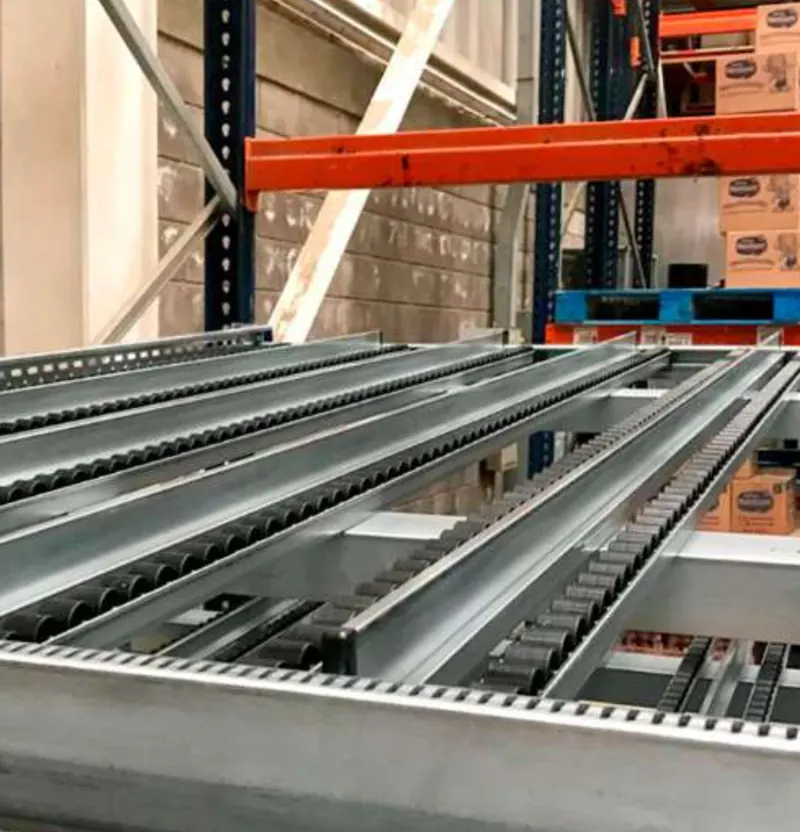 S-06Pallet flow rackPallets advance by gravity on rollers. FIFO rotation.See solution
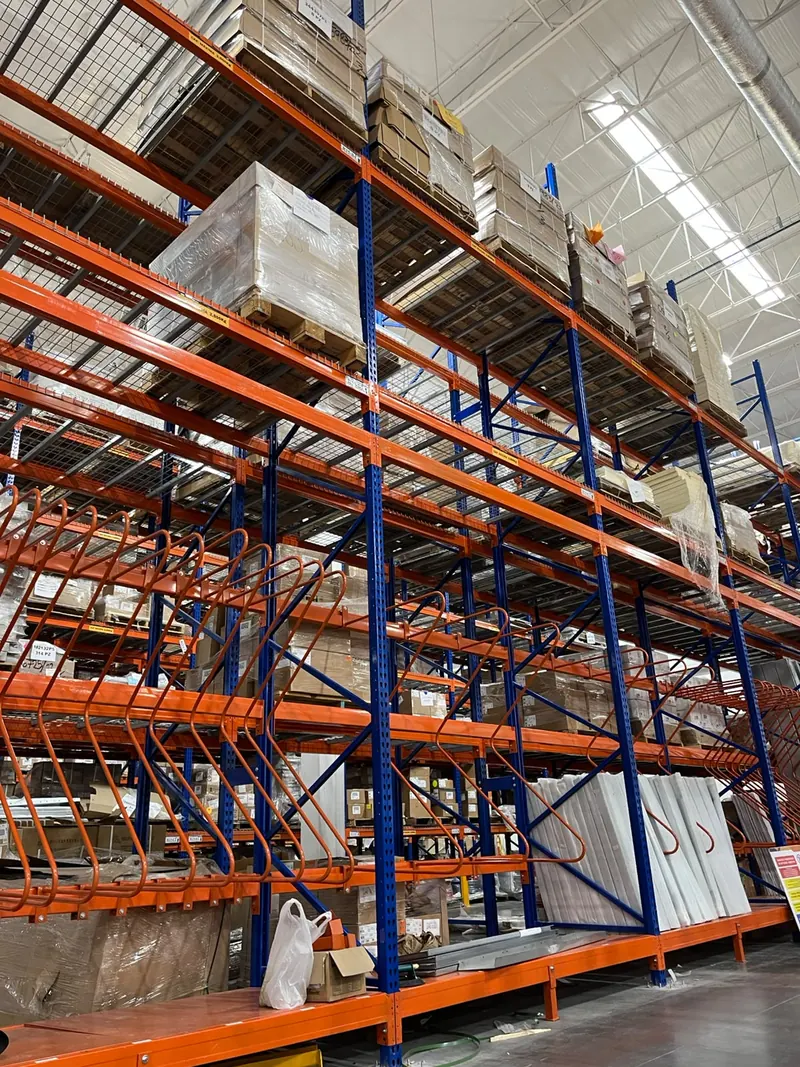 S-01Selective pallet rackDirect access to every pallet. Flexible for a wide variety of SKUs.See solution
Tell us about your storage challenge.
An HIE specialist reviews your operation before preparing a proposal. You don't need to have all the information.